From a R$197 city lecture
to nearly R$4M
in mentorship sales.
A multi-city funnel system designed to turn paid traffic into event attendees, event attendees into premium immersion buyers and qualified participants into R$150,000 mentorship clients — through a structured, layered digital experience.
The business behind the funnel.
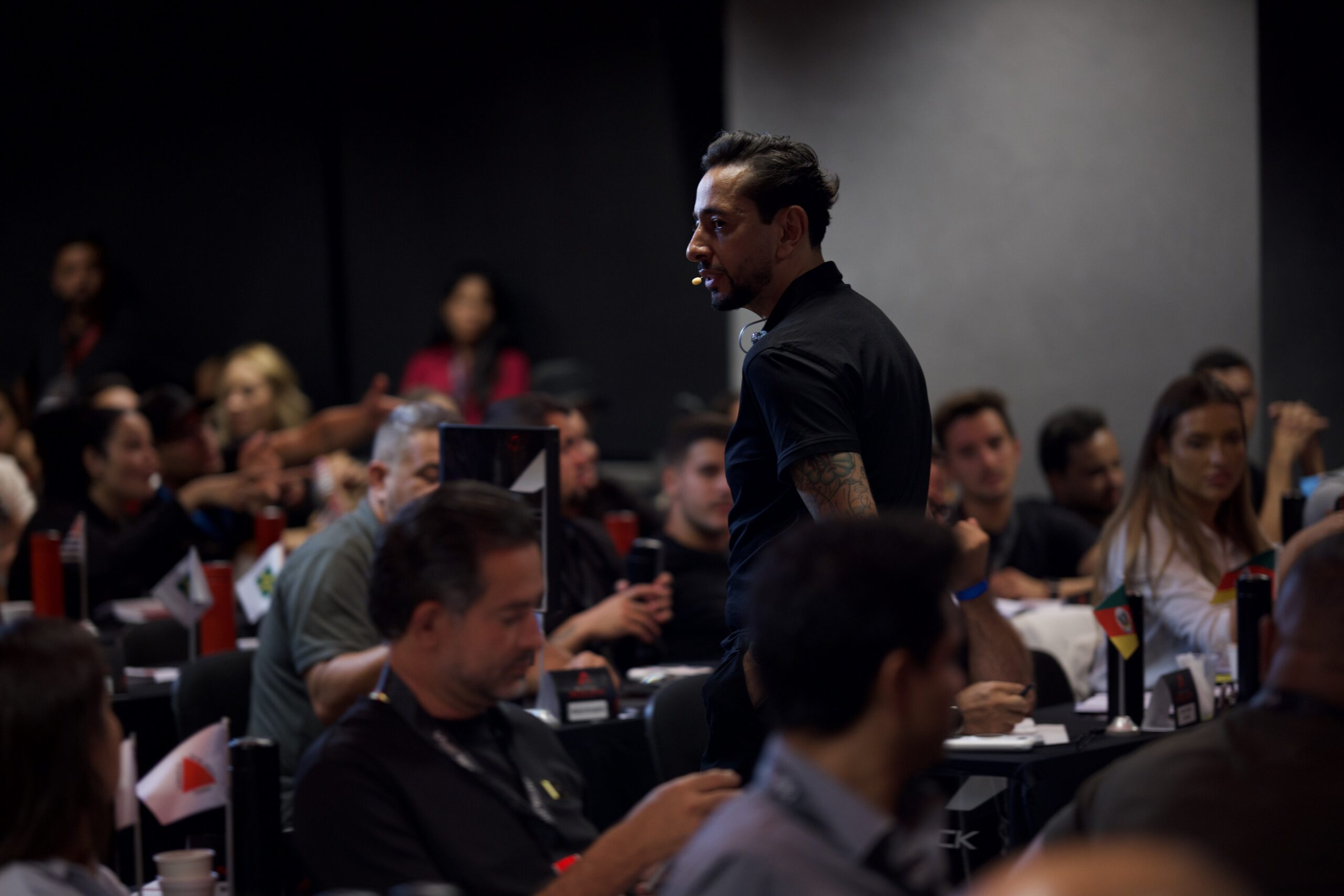
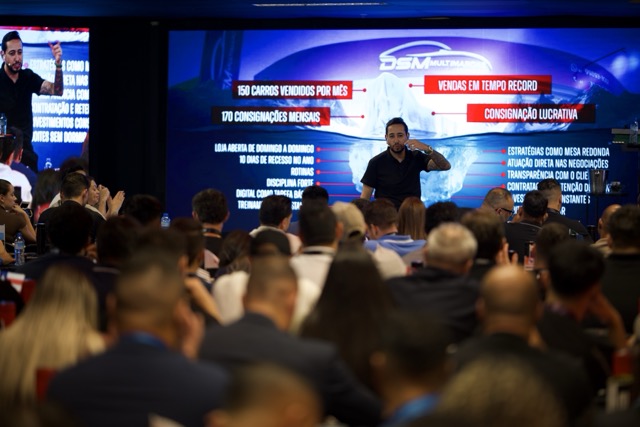
Daniel Ribeiro is the creator of Método DSM — a training program for entrepreneurs, car dealership owners and automotive business leaders, focused on sales, negotiation and business growth. Starting from a single room in a favela with three cars in stock, Daniel built the most respected consignment operation in Brazil, selling over 150 vehicles per month.
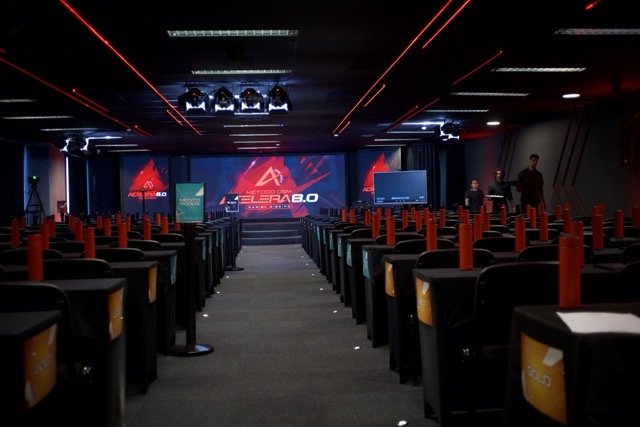
With over 1.3 million followers across social media and more than 3,000 car dealers impacted across Brazil, the campaign was structured around a national event strategy: low-ticket lectures in multiple cities, designed to attract qualified business owners and move them progressively toward a high-ticket 3-day immersion in Alphaville, São Paulo.
The digital infrastructure — from the first city page to the final mentorship pitch — was built as a connected funnel system, not a collection of isolated pages.
Turning cold traffic into a qualified high-ticket pipeline.
The challenge was not to design isolated landing pages. The real objective was to support a complete acquisition and monetization system — one that could scale across multiple cities while maintaining a consistent conversion flow.
Paid traffic needed to generate low-ticket event buyers. Those buyers needed to show up, experience the live lecture and become qualified prospects for a premium immersion. From there, the most qualified participants would be introduced to the main offer: a R$150,000 mentorship.
The funnel had to create progressive commitment at each stage, reduce friction in the purchase and qualification steps, capture the right data for the sales team and maintain consistency across dozens of pages and multiple campaigns running in parallel.
A revenue ladder, not a single sales page.
Instead of asking cold traffic to immediately consider a high-ticket program, the funnel used a low-ticket entry point to lower resistance and build commitment progressively.
A R$197 lecture in the prospect's own city created the first moment of real skin in the game — separating curious scrollers from genuinely interested business owners.
Each 3-hour live lecture then became the trust-building engine for the São Paulo immersion pitch. By the time the offer was presented, the audience was already warmer, more engaged and had experienced Daniel's method firsthand.
Low-ticket event used as the qualifying entry point and trust accelerator
Premium 3-day in-person immersion in Alphaville, SP — sold out with 300 participants
Main offer pitched to a fully qualified, high-intent audience on days 2 and 3
One page per city. One clear path to conversion.
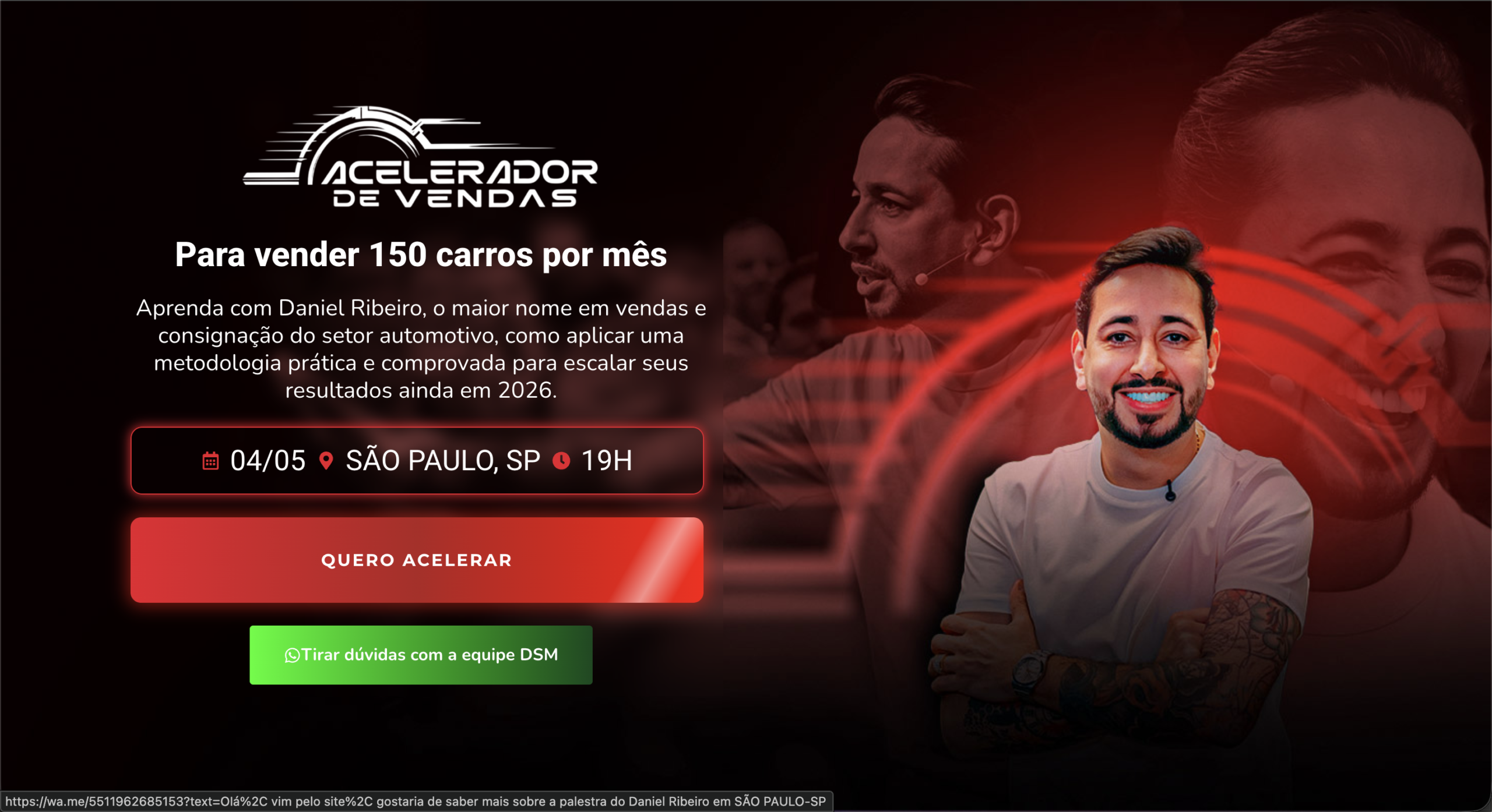
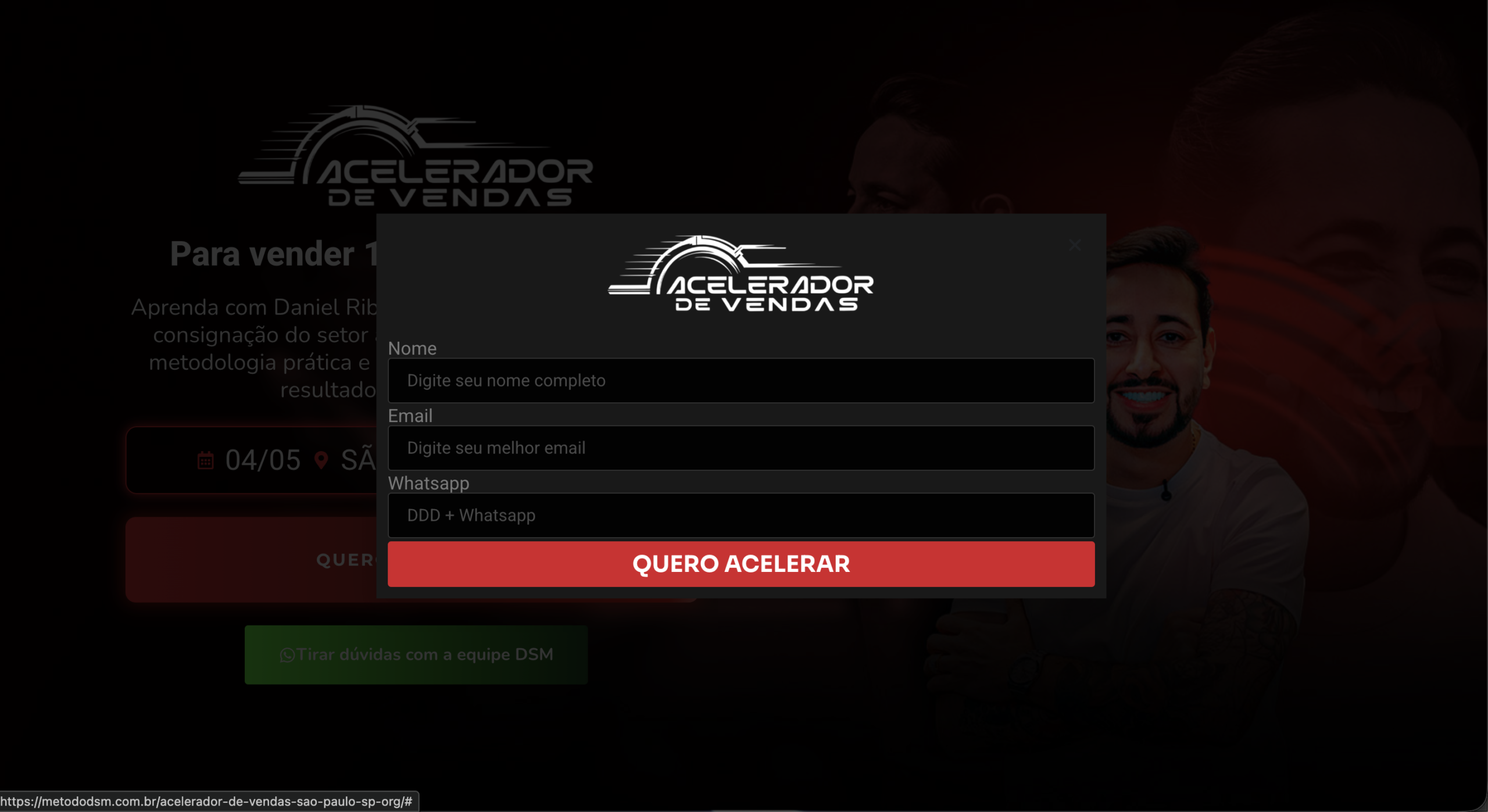
For every city where the lecture took place, we built a dedicated sales page. Each page was designed to convert paid traffic into event buyers while also capturing essential lead data before the checkout step.
The flow was intentionally lean: Paid creative → City sales page → Lead form (name, phone, email) → Checkout → Thank you page → VIP WhatsApp group.
The WhatsApp group served as an engagement layer — event information, reminders and connection were delivered there, keeping participants mentally committed to attending before the lecture even happened.
Each campaign sent traffic to a page tailored to the specific city, event date and local context — no generic redirects.
Name, phone and email captured before payment — giving the commercial team a full contact list regardless of purchase completion.
After purchase, users reached a thank you page with one unmissable next step: joining the VIP WhatsApp group.
Pre-event engagement channel that kept participants informed, connected and committed before the live lecture.
The event became the sales floor.
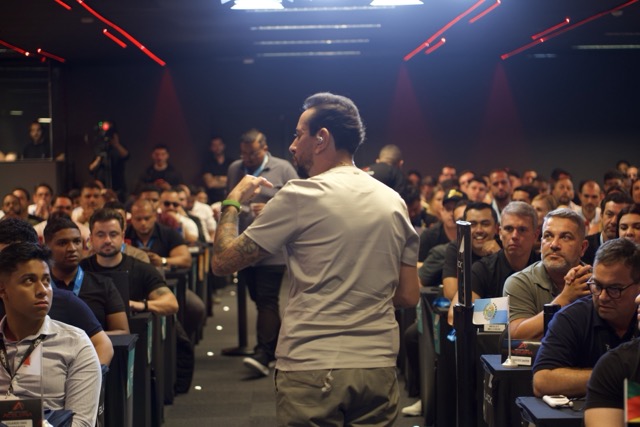
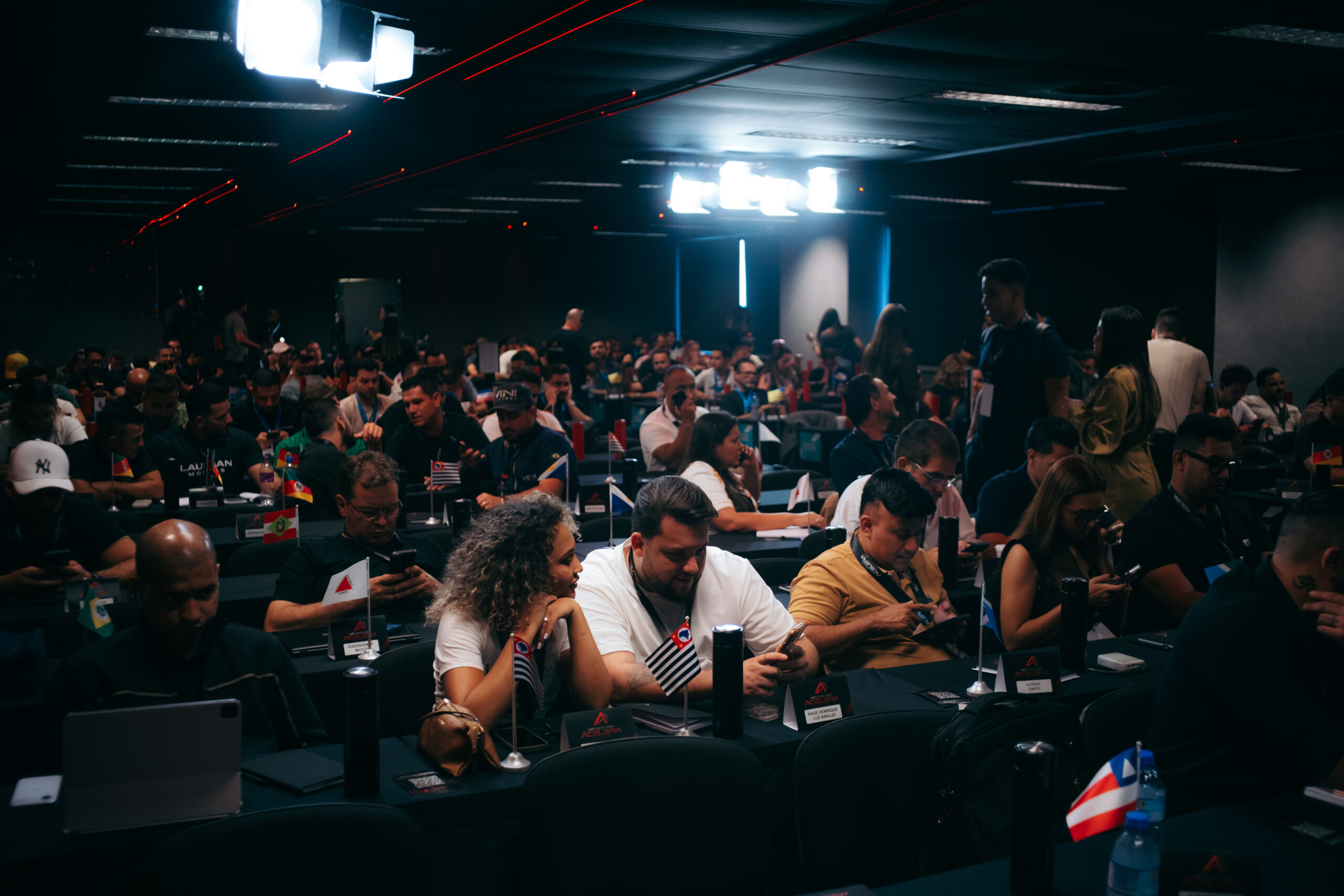
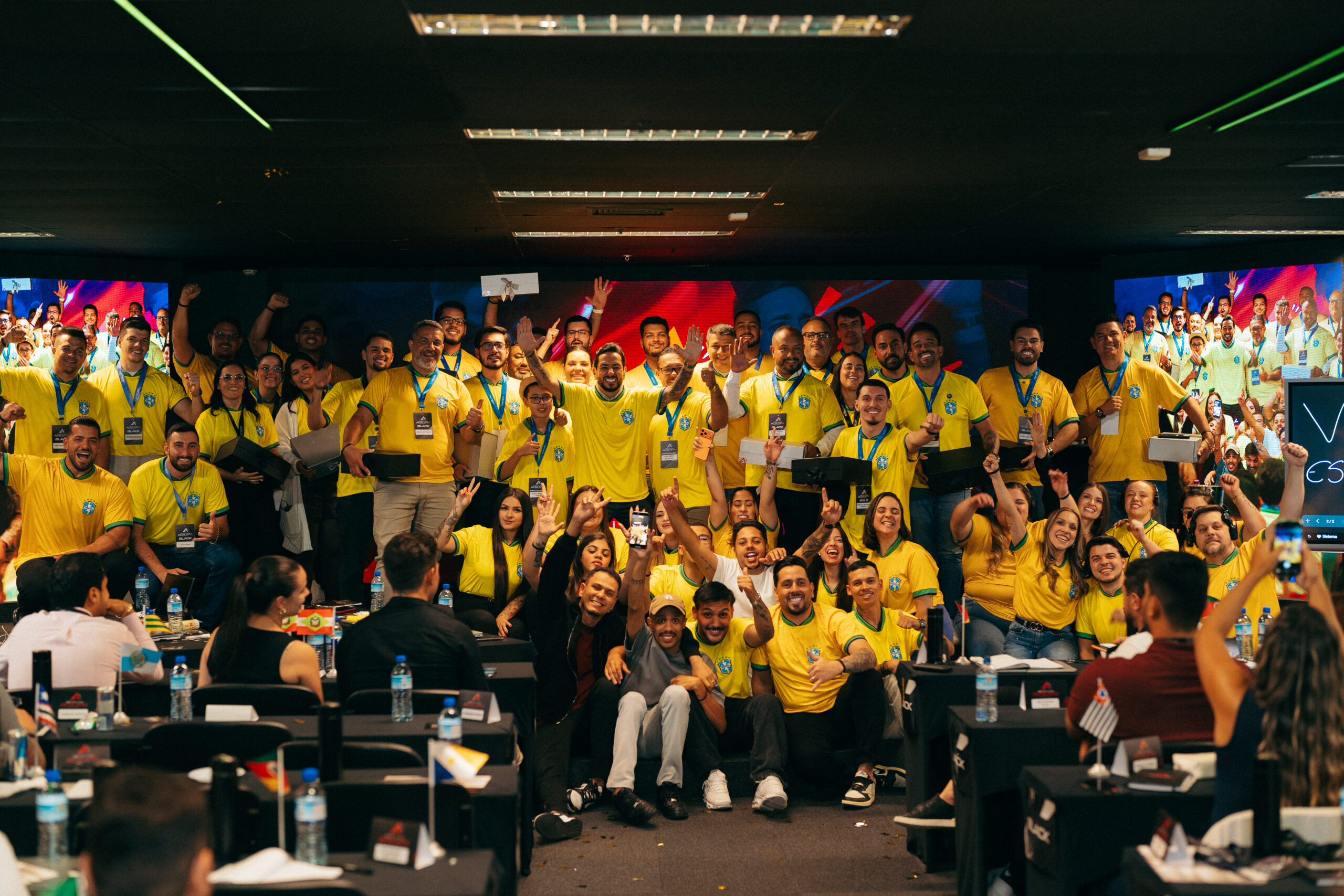
The city lecture was not just a product — it was a 3-hour trust-building mechanism designed to qualify and warm up prospects for the main offer.
During each lecture, Daniel delivered genuinely high-value content on sales and business growth, then pitched the main São Paulo immersion at the end. The commercial team was present and available to close interested participants on the spot.
For those who didn't buy at the event, the lead data captured before checkout gave the sales team a complete list to follow up individually — generating significant additional immersion sales after each lecture.
High-ticket pages built for qualification, not direct checkout.
Parallel to the city lecture funnel, we built the page structure for the São Paulo immersion. At this ticket level, sending cold traffic directly to checkout was not the strategy.
Instead, the pages were designed to capture qualified interest and route leads to the commercial team. Two versions were developed for different traffic and segmentation scenarios.
Paid traffic → Immersion sales page → Access section → Deeper qualification form → Lead sent directly to commercial team for follow-up.
Paid traffic → Immersion page → Access section → Separate qualification form → Thank you page with option to schedule a free business diagnosis call.
Different forms for each version allowed the team to immediately identify lead source, intent level and readiness — enabling a more calibrated conversation for each contact.
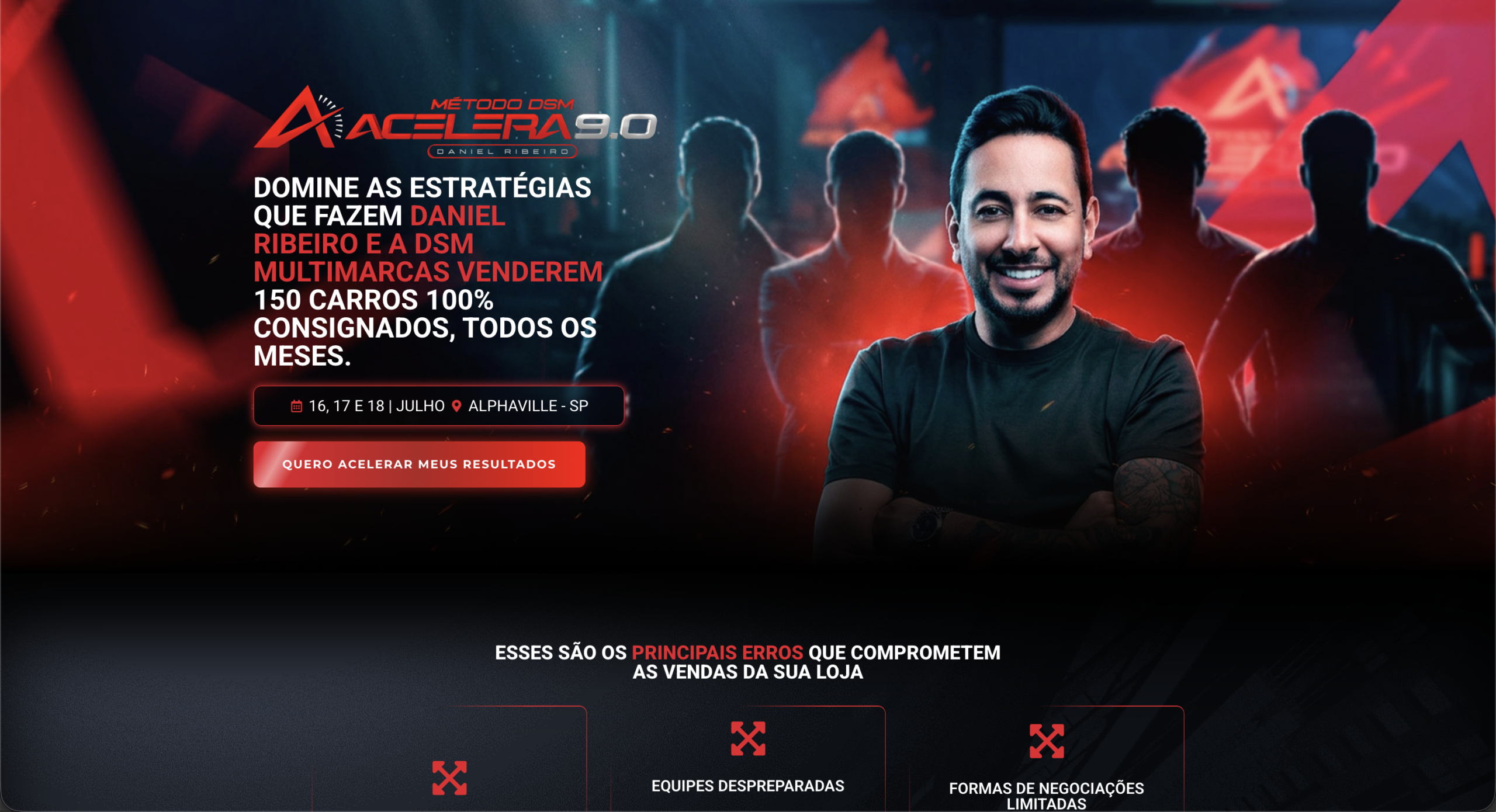
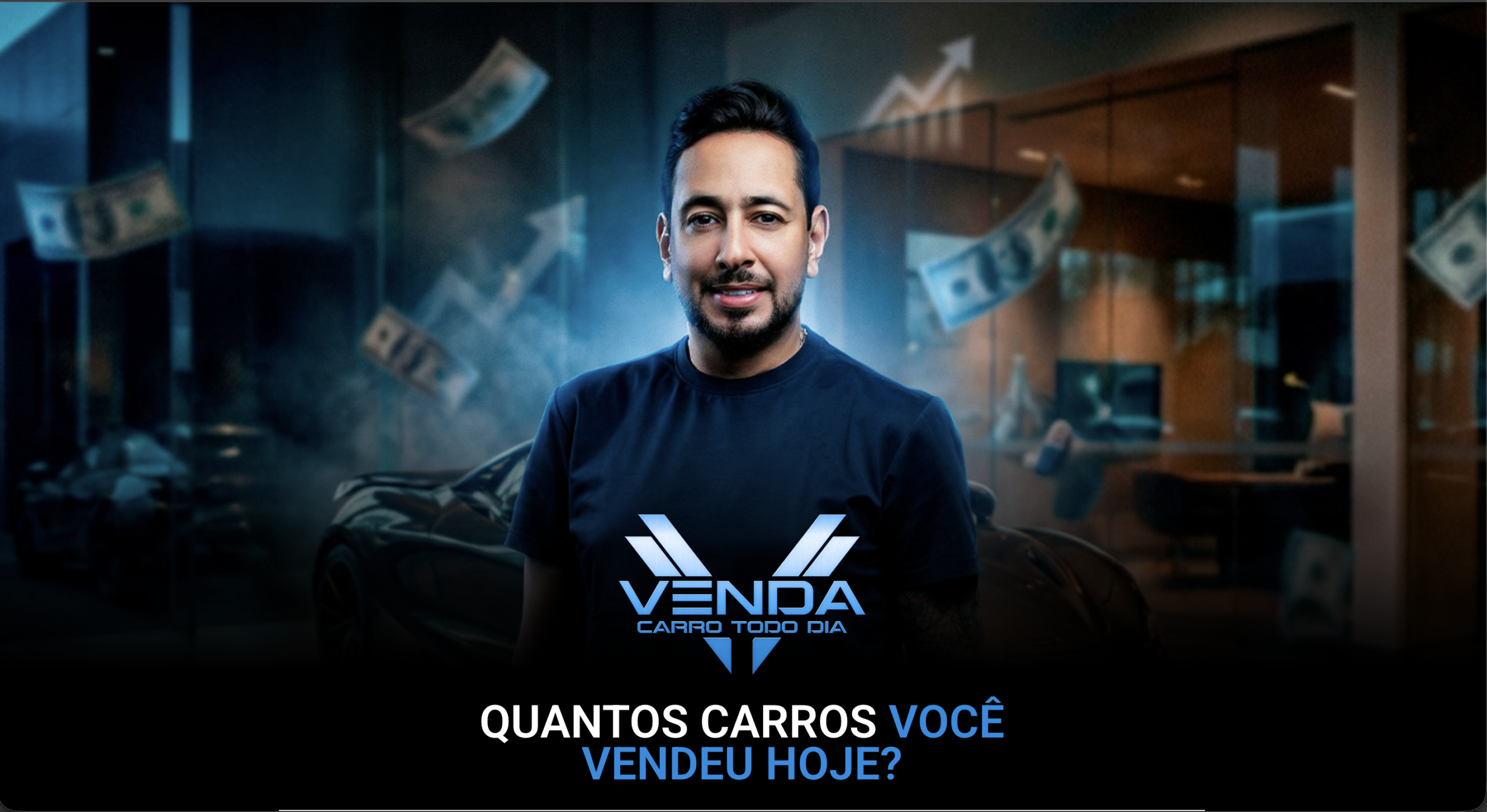
Designing the digital experience behind the funnel.
My responsibility was to design and structure the complete digital funnel experience. I worked closely with the strategy, copy and paid traffic teams to translate the campaign architecture into a clear, persuasive and conversion-focused set of digital touchpoints.
I was not responsible for media buying, campaign copy or core business strategy. My focus was on making the funnel visually coherent, structurally sound and aligned with the commercial process at every stage.
- City-specific sales pages — one per lecture location
- High-ticket immersion pages (with and without price)
- Lead capture form UX — pre-checkout and qualification flows
- Thank you pages and post-purchase flow architecture
- Page hierarchy and visual structure for conversion
- CTA flows and access section design
- Lead segmentation architecture through form differentiation
- Visual consistency across all funnel touchpoints
A structured funnel that helped generate nearly R$4M in high-ticket sales.
The campaign produced a sold-out in-person immersion with 300 participants, generated a highly qualified pipeline for a R$150,000 mentorship offer and resulted in nearly R$4M in mentorship sales — built on a funnel designed to qualify, educate and convert progressively across multiple digital and physical touchpoints.
"Conversion design is not about the page.
It's about the journey between the pages."
This project demonstrates what happens when paid traffic, landing pages, forms, checkout flows, live events and sales teams are designed as a connected system — not isolated assets. The value of the design was not primarily visual. It was structural: organizing decisions, reducing friction, segmenting leads and giving the commercial team exactly what they needed to close at every stage.
I'm open to full-time roles in Spain and Europe. Let's talk about what you're building.